
Key Highlights
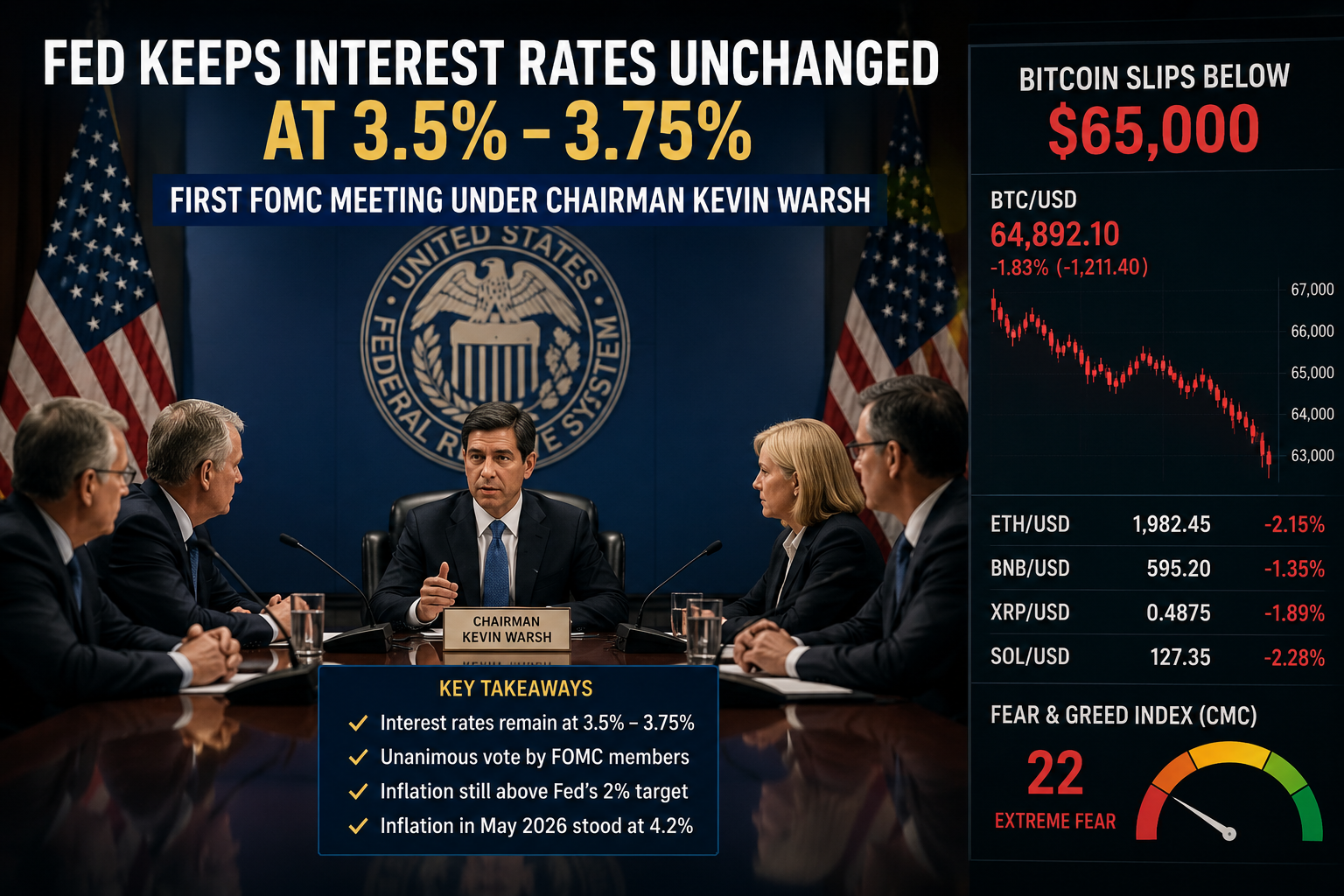
- US policymakers maintained the benchmark rate at 3.5%–3.75% during the June 17 policy gathering.
- The decision marked the first policy meeting chaired by Kevin Warsh following the leadership transition at the Federal Reserve.
- Committee members voted unanimously in favor of keeping rates steady.
- Elevated inflationary pressures continue to delay any potential easing cycle.
Fed Maintains Current Policy Stance
The United States central bank chose not to alter its benchmark interest rate during its June policy session, keeping the target range between 3.5% and 3.75%. The announcement came after the first Federal Open Market Committee meeting led by Chairman Kevin Warsh, who recently succeeded Jerome Powell as the head of the Federal Reserve.
Officials agreed unanimously that current economic conditions do not justify a reduction in borrowing costs. Policymakers emphasized that inflation remains well above the Fed’s long-term objective, making it premature to begin loosening monetary policy.
Recent economic data showed consumer prices continuing to rise at a pace that remains uncomfortable for central bank officials. Energy-related costs, particularly fuel and utility expenses, have continued to contribute to broader inflationary pressures across the economy.
Although Jerome Powell stepped down from the chairman role earlier this year, he continues serving on the Federal Reserve Board, providing continuity during the leadership transition.
Cryptocurrency Market Reacts Cautiously
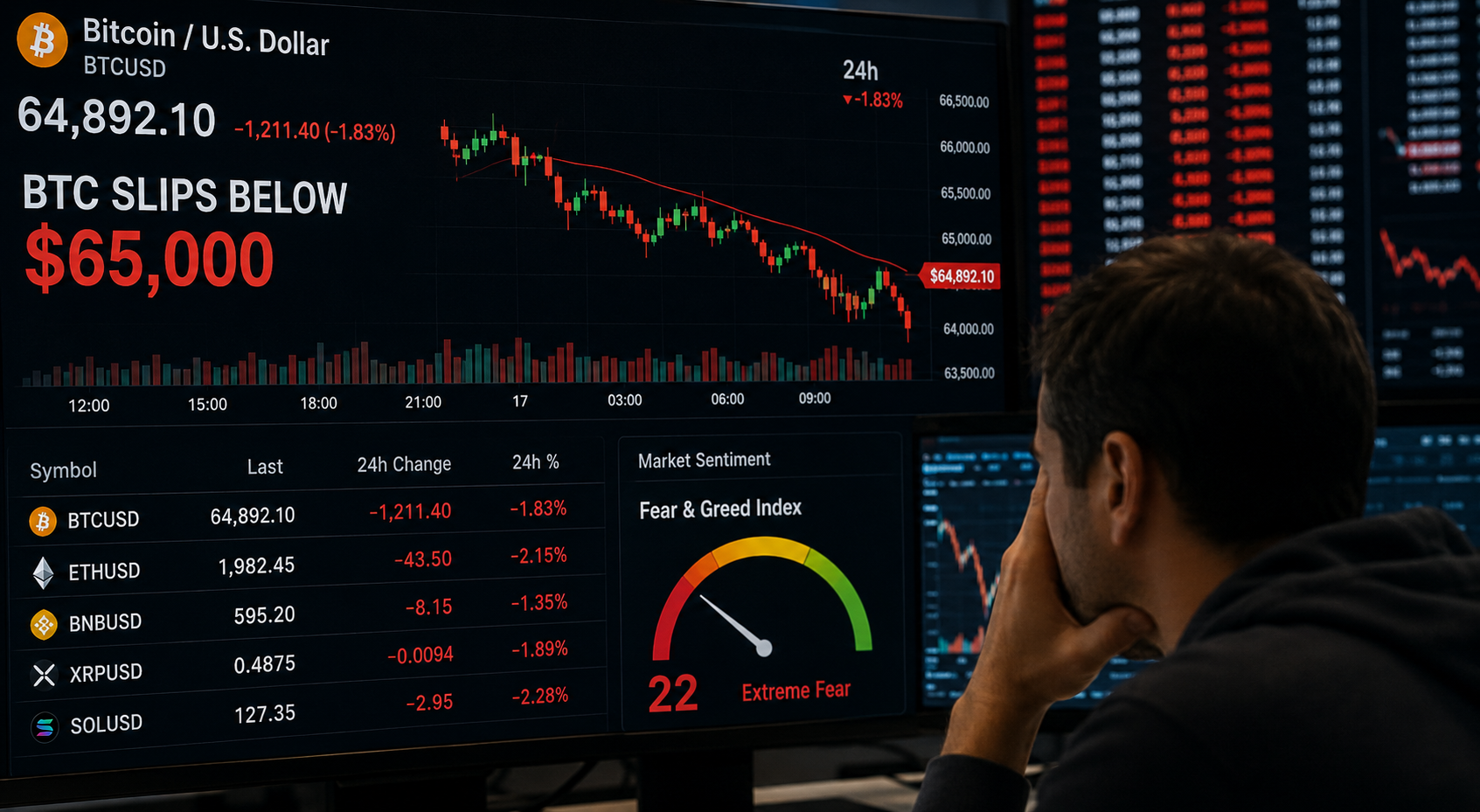
Digital asset markets displayed mild weakness following the Fed’s decision. Market participants had largely anticipated no change in interest rates, which helped prevent a major sell-off across cryptocurrencies.
Bitcoin briefly slipped below the $65,000 mark but managed to maintain support near the $64,000 region. Ethereum continued to face resistance around the $2,000 level, while several major alternative cryptocurrencies, including BNB, XRP, and Solana, also traded under pressure.
Investor sentiment across the crypto sector remains cautious. Market indicators suggest that traders are still concerned about tighter financial conditions and the possibility of interest rates remaining elevated for a longer period.