How Algorand Is Powering Real-World Blockchain Use Cases Beyond Crypto Trading
Algorand is one of the few blockchain networks built with a strong focus on scalability, speed, and real-world utility. Created by renowned cryptographer Silvio Micali, the network was designed to solve some of the biggest problems facing older blockchains, including slow transaction speeds, high fees, and energy inefficiency.
In simple terms, Algorand is a fast, carbon-neutral blockchain capable of processing thousands of transactions per second with near-instant finality. Unlike many traditional networks, it does not fork into multiple competing versions, which gives institutions more confidence when handling high-value digital assets.
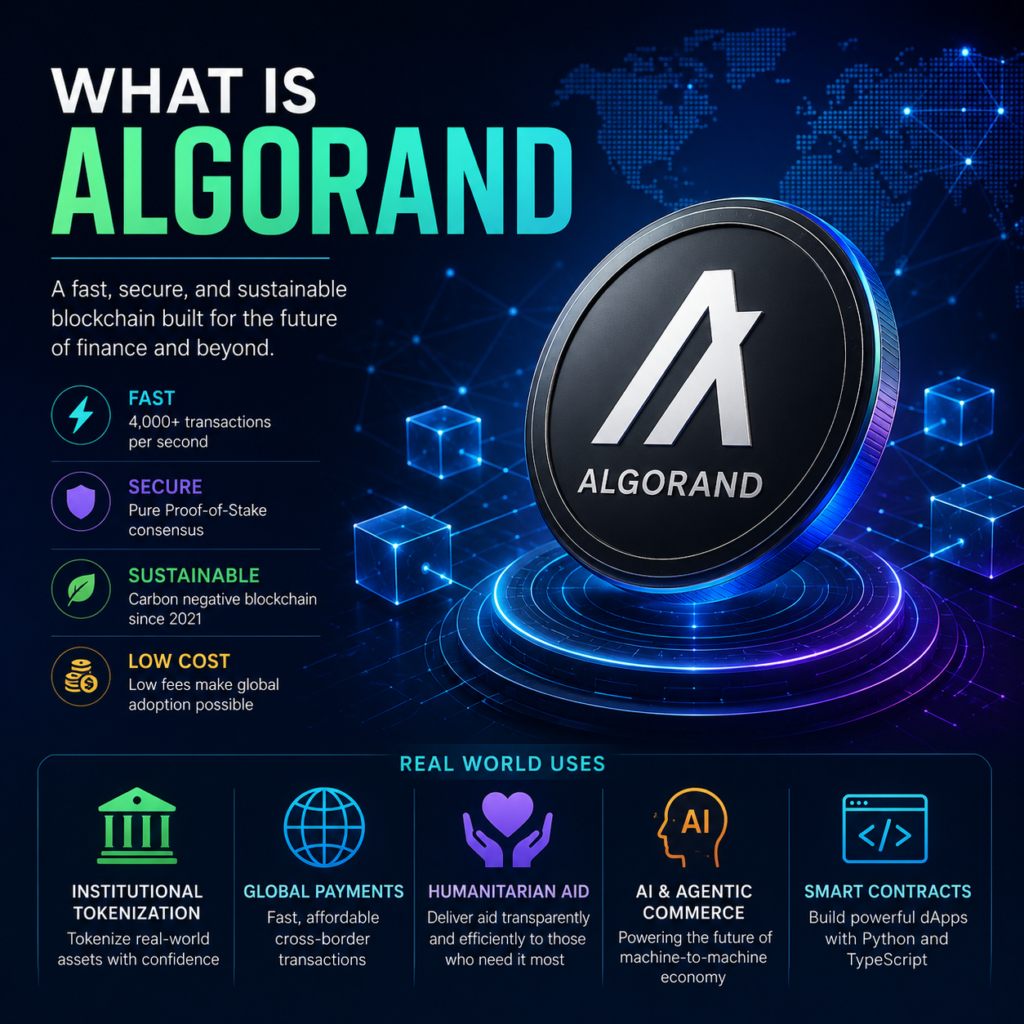
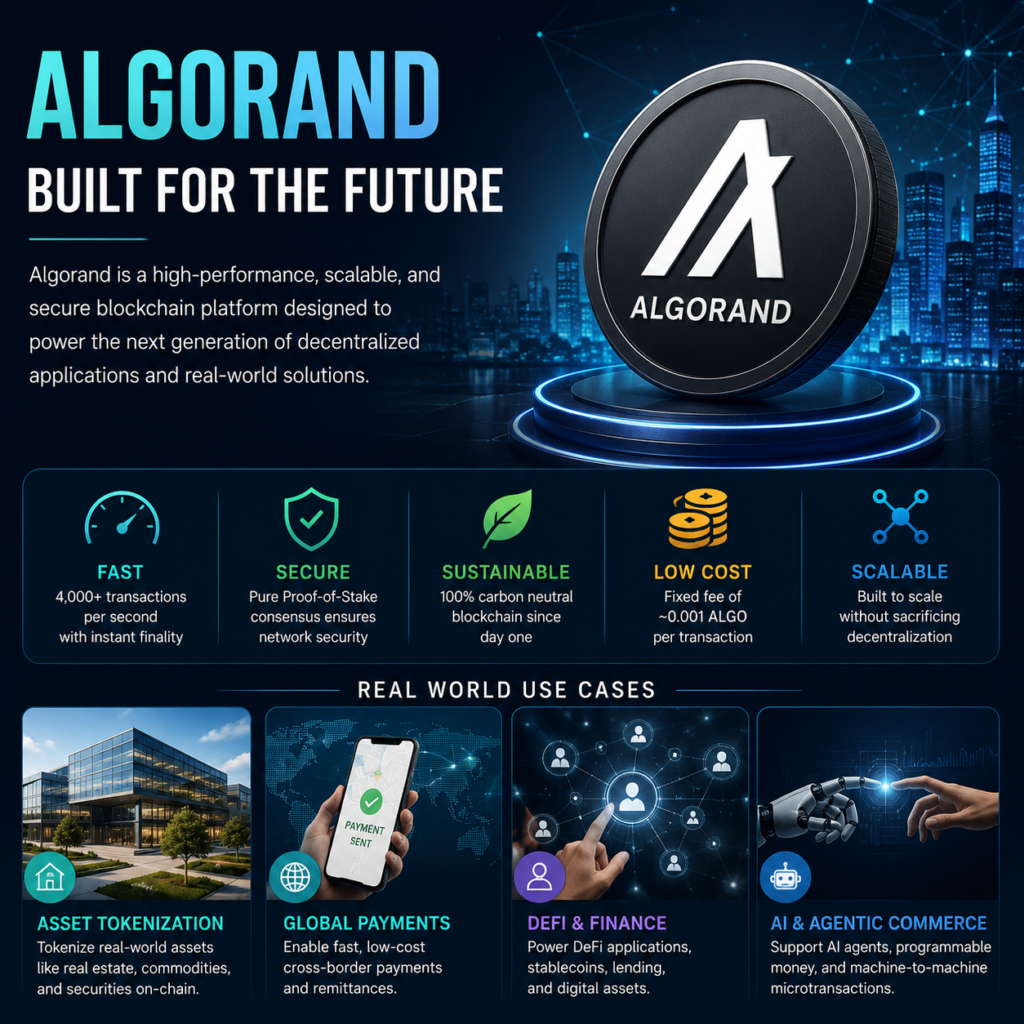
Today, Algorand is being used for much more than cryptocurrency trading. One of its biggest use cases is institutional asset tokenization. Financial platforms are using the network to convert real-world assets like real estate, treasury bills, and commodities into blockchain-based digital tokens. Platforms such as Lofty allow users to buy fractional shares of rental properties using blockchain technology, while stablecoins like USDC and EURQ are also issued on the network.
Algorand is also becoming important in global payments and humanitarian aid systems. Projects like HesabPay use the network to distribute aid in regions with limited banking infrastructure. Because transaction fees on Algorand are extremely low around 0.001 ALGO per transaction and transfers settle in seconds, organizations can move funds quickly and efficiently without relying on traditional intermediaries.
Another emerging area is AI-driven commerce. Developers are building systems where AI agents can pay each other automatically for services like data access and computation. Algorand’s infrastructure supports these machine-to-machine payments securely and at low cost, making it attractive for future AI economies.
Technically, Algorand runs on a Pure Proof of Stake (PPoS) consensus mechanism. This makes the network energy efficient while still maintaining strong security. The blockchain has also positioned itself as quantum-resistant, meaning future quantum computers would not easily compromise its historical transaction records.
The native token, ALGO, is used for transaction fees, staking, governance, and network participation. Holders help secure the blockchain and can earn rewards through staking mechanisms.
The big question many investors ask is whether ALGO can eventually reach $10. While the possibility exists in theory, it would require massive adoption, strong market cycles, and significantly higher institutional usage. Reaching $10 would place Algorand among the largest blockchain ecosystems in the world by market capitalization. For that to happen, the network would need sustained developer growth, broader DeFi expansion, major enterprise partnerships, and increasing demand for ALGO itself.
Supporters argue that Algorand’s technical strengths fast settlement, low fees, environmental sustainability, and institutional focus give it long-term potential. Critics, however, point out that competition in the blockchain industry remains intense, with networks like Ethereum, Solana, and Cardano all competing for similar markets.
Ultimately, Algorand’s future depends less on hype and more on adoption. If the network continues expanding into finance, payments, tokenization, and AI infrastructure, ALGO could remain an important player in the blockchain space for years to come.